By URLsy Team · Lifecycle Marketing
Choosing dynamic vs static QR codes is a strategic decision, not a design detail. Static codes can work for evergreen destinations, but dynamic codes are usually better for campaigns that need optimization, testing, and measurable attribution over time.
Key takeaways
- Static QR codes suit fixed destinations and low-change content.
- Dynamic QR codes support active campaign updates and testing.
- Shared analytics workflows make QR optimization faster.
When static QR codes are the right choice
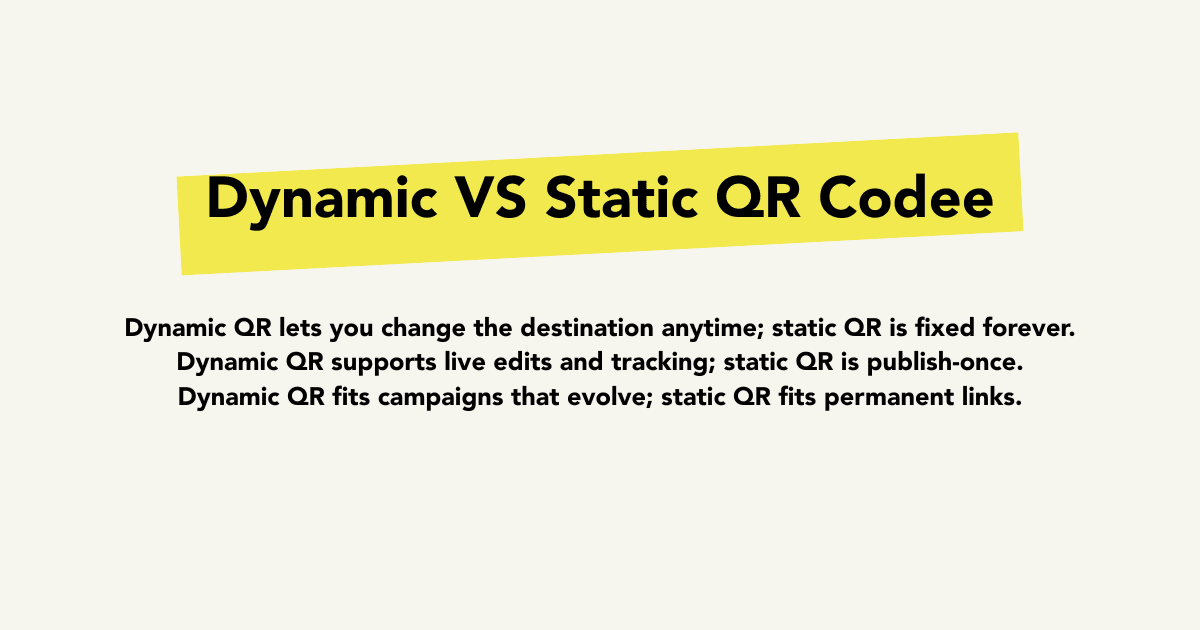
Use static QR codes for fixed content such as permanent docs, compliance resources, or evergreen product pages that almost never change.
Static codes are simple to generate, but they lock destination at creation time. If anything changes later, you need to replace the code itself.
For low-change scenarios, that tradeoff can still be acceptable.
Why dynamic QR codes are better for active marketing
Dynamic QR codes let you change destination without replacing printed assets. This is critical for promotions, events, and seasonal campaigns.
They also support landing-page testing and message updates while preserving campaign continuity.
If your team runs iterative campaigns, dynamic is almost always the safer default.
Measurement differences marketers should care about
Static QR codes can still generate visits, but tracking flexibility is limited because you cannot re-route easily.
Dynamic QR workflows typically pair with short link analytics, making scans easier to segment by campaign, location, or audience.
For teams focused on attribution, dynamic plus analytics usually wins on decision quality.
Cost and workflow tradeoffs
Static codes may look cheaper initially, but operational costs rise when campaigns need updates and assets must be reprinted.
Dynamic workflows reduce that hidden cost by decoupling physical code from destination logic.
The right comparison is total campaign cost over time, not generation cost alone.
Recommended decision framework
Choose static for permanent resources with no expected changes. Choose dynamic for any campaign with timing, testing, or optimization needs.
If uncertain, default to dynamic for future-proofing, then manage destinations through your short-link platform.
This ensures your QR strategy can evolve as campaign insights improve.
FAQ
Can dynamic QR codes improve campaign ROI?
They can improve ROI by reducing reprint costs, enabling destination updates, and supporting better optimization through analytics.
Are static QR codes bad for marketing?
Not always. They are fine for fixed destinations, but less suitable for campaigns that require ongoing updates or testing.
Related next steps
Generate QR codes with tracking
Create dynamic QR workflows in urlsy.cc.
Explore →Track QR code scans
Pair your QR strategy with cleaner measurement.
Explore →TinyURL alternative
Compare modern campaign workflows vs basic shortening.
Explore →Start with urlsy.cc
Build QR campaigns tied to short links and analytics.
Explore →Call to action
Turn the strategy into tracked links
Apply these ideas with branded short links, QR codes, and analytics in one campaign workflow.